A panic attack doesn’t ask for permission before showing up. It can happen in a crowded place, at night when you’re trying to sleep, or even during a quiet moment when everything seems “fine.” Suddenly your heart races, your chest feels tight, your breathing feels wrong, and fear takes over your body.
In those moments, people often say, “Just relax” — but anyone who has experienced a panic attack knows it’s not that simple.
What does help, gently and naturally, is breathing.
your breath is always with you. And when used in the right way, it can slowly guide your body out of panic and back into safety.
Understanding What’s Happening in Your Body
During a panic attack, your nervous system switches into fight or flight mode. Your body thinks there is danger, even when there isn’t. This causes fast breathing, dizziness, sweating, and a racing heart.
The goal of breathing during panic is not to force calm — it’s to signal safety. Slow, steady breathing tells your brain:
“I am not in danger. I am safe right now.”
Gentle Breathing Patterns That Actually Help
These breathing patterns are simple, realistic, and safe to use during a panic attack. Choose the one that feels easiest for you.
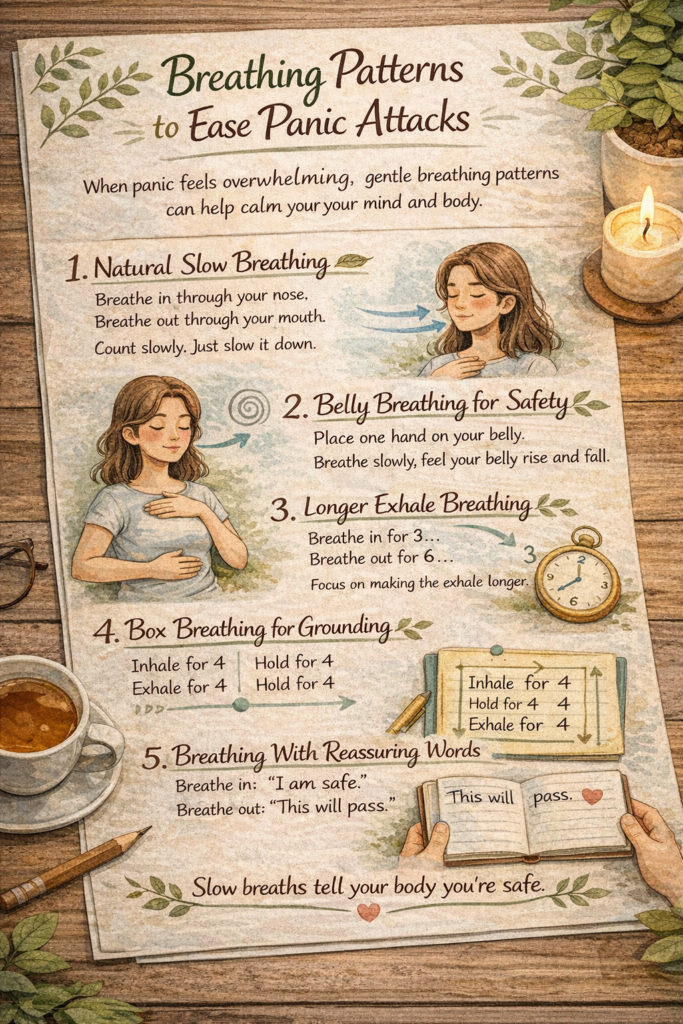
1. Natural Slow Breathin
When panic hits, deep breathing can feel uncomfortable. Start slow.
Breathe in through your nose gently.
Breathe out through your mouth slowly.
Don’t force it. Just slow it down. Count softly in your mind if it helps.
Even slowing your breath by a little bit can reduce panic.
2. Belly Breathing for Safety
Place one hand on your belly and one on your chest.
As you breathe in, let your belly rise.
As you breathe out, let it fall.
This breathing tells your nervous system that it’s okay to relax.
It may feel strange at first — that’s normal.
3. Longer Exhale Breathing
The exhale is the calming part of the breath. Breathe in for 3 or 4 seconds.
Breathe out for 6 or 7 seconds.
Longer exhales reduce heart rate and ease chest tightness.
If counting feels stressful, simply focus on making the exhale slower.
4. Box Breathing for Grounding
This method gives your mind something steady to focus on.
Breathe in slowly.
Pause gently.
Breathe out slowly.
Pause again.
Imagine drawing a square with your breath.
This helps interrupt racing thoughts and brings mental balance.
5. Breathing With Reassuring Words
Sometimes panic needs comfort, not technique. As you breathe in, silently say: “I am safe.”
As you breathe out, say: “This will pass.”
This combines breathing with emotional reassurance and reduces fear.
When Breathing Feels Hard
Some people worry they are “not breathing right” during panic. There is no perfect breath.
If breathing feels difficult:
• Open a window or step into fresh air
• Sit upright rather than lying flat
• Place your feet on the ground and feel their support Most importantly, be kind to yourself.
Practice Before Panic
Breathing techniques work best when practiced during calm moments.
Just a few minutes a day helps your body remember these patterns when panic appears. Think of it as training your nervous system to trust safety again.
A Gentle Reminder
Panic attacks feel intense, but they are not dangerous.
You are not broken.
You are not weak.
Your body is simply responding to stress. And your breath is your anchor
Final Words
Healing from panic doesn’t happen overnight. Some days are easier than others. But every time you pause and breathe, you are choosing